

Engineering
Valencian Graduate School and Research Network of Artificial Intelligence (ValgrAI)
Short Biography
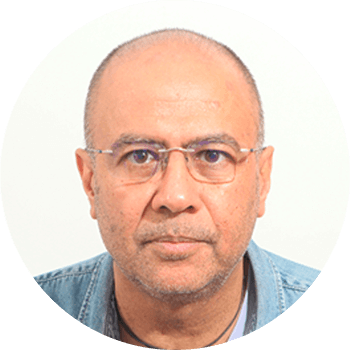
Prof. Wael El-Deredy graduated in Electrical Engineering in 1988 from Ain Shams University, Cairo (Egipt) and obtained his Ph. D. degree in Neurocomputing from the Imperial College, London (UK).
In 2005 he was awarded a Lecturer position in Computational Neuroscience at the University of Manchester and became Professor of Cognitive Electrophysiology at the Faculty of Medicine in 2012. Since 2018, he is Professor of Biomedical Engineering and Director of the Centre for R & D in Health Engineering at the University of Valparaiso (Chile).
Wael El-Deredy’s research applies engineering principles to neural systems, integrating biophysical modelling, signal processing, and probabilistic inference to understand brain dynamics. His research advances neuroengineering, brain-computer interfaces, and clinical applications by bridging biophysical and data-driven generative models of brain function.
Experimental Sciences and Mathematics
Universitat de València (UV)
Instituto de Física Corpuscular (IFIC)
Short Biography
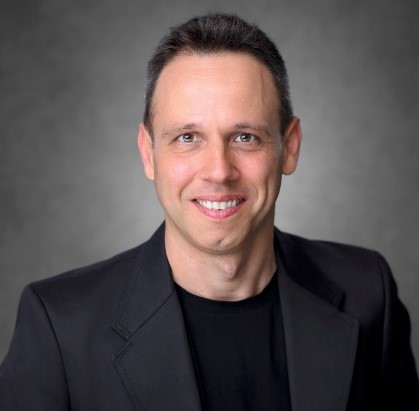
Prof. Iván Agulló graduated in Physics in 2004 from the University of Valencia, where he also obtained his Ph. D. degree in 2009. He developed his postdoctoral research in the US, working at the University of Wisconsin and The Pennsylvania State University, and also in the UK as a Marie Curie Fellow at the University of Cambridge. From 2013 to 2026, he was a faculty member in the Department of Physics and Astronomy at Louisiana State University (LSU), advancing research, education, and service. Prof. Agulló leads a dynamic theory group, and explores a broad range of topics at the interface of quantum physics and gravitation, including relativistic quantum information, quantum field theory in curved spacetimes, quantum gravity, cosmology, black hole physics and quantum technologies. These efforts involve collaborations with groups within his department and international teams of experimentalists and theorists. Prof. Agulló strive to foster an intellectually stimulating environment, encouraging interdisciplinary research that reflects his diverse interests.
Experimental Sciences and Mathematics
Universitat Politècnica de València (UPV)
Instituto de Ingeniería del Agua y Medio Ambiente (IIAMA)
Short Biography
Dr Maria Val-Martin is an atmospheric scientist with a PhD in Environmental Engineering from Michigan Technological University. She developed her research career in the US, working at Harvard University, NASA, and Colorado State University in collaboration with National Center for Atmospheric Research. In 2017, she joined the Leverhulme Centre for Climate Change Mitigation at the University of Sheffield, where she was Senior Lecturer and lead an interdisciplinary research group as a UKRI Future Leaders Fellow. Her research focuses on atmosphere–biosphere–climate interactions, air quality and climate change mitigation. She uses Earth system modelling with satellite observations and field data to evaluate the environmental trade-offs and co-benefits of land-based carbon dioxide removal strategies. Her work informs national and international policy and supports clean air strategies and UN Sustainable Development Goals.
Experimental Sciences and Mathematics
Consejo Superior de Investigaciones Científicas (CSIC)
Instituto de Física Corpuscular (IFIC)
Short Biography
Prof. Jorge Peñarrubia graduated in Physics in 1999 from the University of Valencia and obtained his PhD in 2003 from the University of Heidelberg. He carried out his postdoctoral research in Europe, working at the Max Planck Institute for Astronomy in Heidelberg (Germany) and at the University of Cambridge (UK), as well as at the University of Victoria (Canada). In 2012, he was awarded a Ramón y Cajal fellowship. Since 2013, he has been a faculty member at the Institute for Astronomy of the University of Edinburgh (UK), and a foreign member of the Spanish Royal Academy of Sciences since 2022. His research focuses on the nature of dark matter and on the dynamical processes that govern self-gravitating systems across a wide range of scales. His scientific interests span galactic dynamics, the physics of collisional systems, statistical mechanics applied to non-equilibrium gravitating systems, and the role of chaos in gravitational dynamics. His work applies Bayesian inference techniques to observational data and combines analytical modelling with numerical methods to study diffusion, entropy production, capture phenomena, and the response of gravitational systems to time-dependent perturbations, with applications ranging from dark-matter-dominated galaxies to the dynamics of the Local Group and the Milky Way.